

Futureproofing the Community Service Workforce
Canada’s nonprofit and community service sector employs more than two million people and delivers essential services that millions of Canadians rely on every day. Yet many organizations face growing challenges in adapting to an increasingly digital world. Limited resources, competing priorities, and difficulties attracting and retaining talent have left many organizations without the digital skills and infrastructure needed to fully realize their impact.
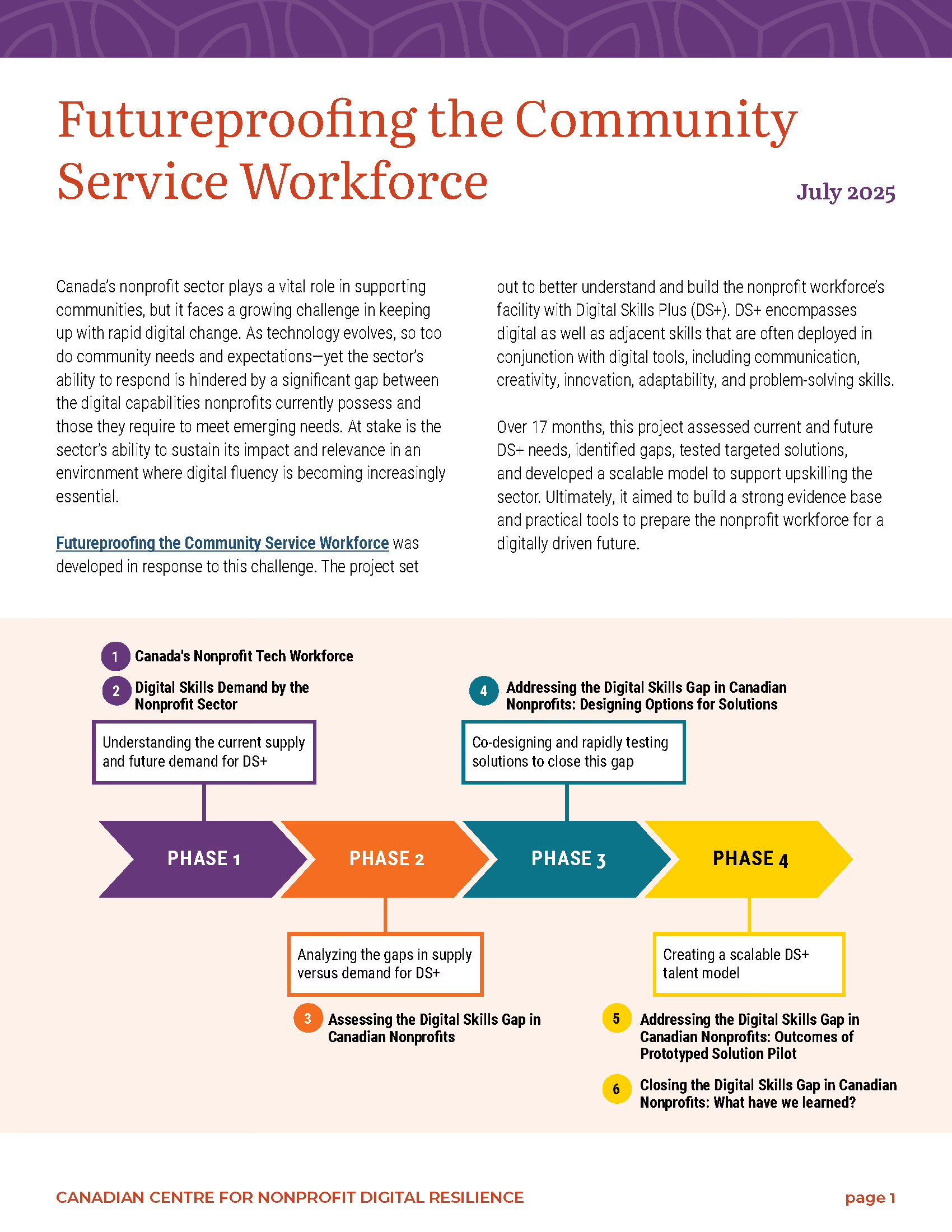
Futureproofing the Community Service Workforce was a national research and innovation initiative designed to better understand these challenges and identify practical solutions. Led by a consortium of partners including Blueprint, the Canada Centre for Nonprofit Digital Resilience (CCNDR) through Imagine Canada, The Dais at Toronto Metropolitan University, and the Digital Governance Council, the project was funded through the Government of Canada’s Skills for Success program. Together, partners worked with nonprofit organizations, sector leaders, funders, and practitioners across the country to strengthen the workforce that supports Canada’s communities.
Mapping the digital skills gap
Futureproofing combined labour market analysis, workforce research, sector engagement, and rapid prototyping to build one of the most comprehensive pictures, to date, of digital skills in Canada’s nonprofit sector. Through surveys, interviews, job posting analysis, census data, and collaborative design processes, the project team examined the supply of digital talent and the growing demand for digital capabilities across community organizations. We identified critical gaps in areas such as data management, digital leadership, cybersecurity, privacy, and data-informed decision-making.
A major contribution of the initiative was the development of the Digital Skills Plus (DS+) Framework, which recognizes that effective digital transformation requires more than technical expertise alone. The framework combines digital competencies with transferable skills, including communication, problem-solving, adaptability, creativity, and innovation—capabilities that are increasingly essential across all roles in the sector.
From research to a national standard
The project’s impact has continued well beyond its initial research phase. Building on this work, the Digital Governance Council collaborated with Blueprint to develop the DGSI 135 Digital Capability Assessment Framework, translating the project’s findings into a practical implementation standard for non-profit and community service organizations. Supported by an accompanying toolkit developed by Blueprint, the framework enables organizations to assess their digital maturity across areas such as data practices, cybersecurity, digital leadership, AI readiness, and technology infrastructure. Scheduled to become a National Standard of Canada in 2026, it demonstrates how the project’s evidence has evolved into a lasting resource that will help organizations strengthen their digital capacity for years to come.
These reports and tools demonstrate how collaborative research can move beyond identifying challenges to creating practical resources that strengthen organizations, inform policy, and shape the future of Canada’s nonprofit sector.
Explore the reports



Building Data Management Capacity Prototype: Explore the prototype activities

Our team and partners live and work on the traditional territory of many Indigenous people across Turtle Island. Blueprint’s home office is situated in the area known as Tkaronto, an area that has been caretaken by the Anishinabek Nation, the Haudenosaunee Confederacy, and the Huron-Wendat for thousands of years. We strive to meaningfully incorporate principles of reconciliation with First Nations, Inuit, and Métis peoples in our day-to-day work, as is our collective responsibility as treaty people, which requires ongoing reflection and collective action.
© 2026 Blueprint. All rights reserved. Accessibility | DEI at Blueprint | Careers at Blueprint